City Guide
Shenzhen for First-Time Visitors: Practical 2026 Guide
By Mars · Based in Shenzhen · Last verified: August 27, 2026
Quick answer: Shenzhen works best as a one- or two-day city break. Stay in Futian for the easiest all-around first visit, use the metro for most long trips, and plan by district rather than treating the city as one compact center. For a first day, choose either a modern Futian route or a west-to-east Nanshan waterfront route—not both at full length.
Shenzhen is often treated as a gateway between Hong Kong and mainland China. It deserves more than that. The city offers waterfront parks, electronics markets, modern civic spaces, theme parks, older commercial streets, and a growing collection of visitor services designed for international arrivals.
The challenge is distance. Shenzhen stretches across several large districts, and attractions that look close on a city map can require a metro ride, a station transfer, and a long walk from the correct exit. A good first trip starts with choosing one or two geographic clusters.
Is Shenzhen Worth Visiting?
Shenzhen is a good addition if you enjoy modern cities, urban parks, electronics, contemporary architecture, waterfront walks, or seeing how a fast-growing Chinese city works in everyday life. It is also one of the easiest mainland destinations to combine with Hong Kong.
It may be less suitable if your only priority is imperial architecture or traditional historic neighborhoods. Shenzhen has heritage sites, but that is not the city’s main character. Its strongest first-visit experience is the contrast between new civic districts, commercial energy, green public spaces, and the Hong Kong-facing waterfront.
How long should you stay?
- A day trip works if you arrive early and choose one compact route.
- One night removes some of the pressure of making the last train or border connection and lets you see the city after dark.
- Two days are better if you want to combine Futian or Luohu with Nanshan.
- The eastern beaches and Dapeng should normally replace a central-city day, not be added casually to a short itinerary.
If your only question is how to cross the boundary, use the separate Hong Kong to Shenzhen guide and border-crossing comparison.
What to Set Up Before You Arrive
Do the national travel setup before building a Shenzhen itinerary. You should have usable mobile data, at least two payment options, a map that works in mainland China, and your hotel name and address saved in Chinese.
Use these detailed guides rather than trying to complete every setup step on arrival:
- Internet access in China
- Apps to download before visiting China
- How to pay in China as a foreign visitor
- How to use Amap in China
Also save the Chinese names of your first station, hotel, and attraction. Shenzhen Metro has English signage and multilingual assistance at selected major stations, but saving the exact destination prevents confusion between similarly named metro stations, railway stations, and checkpoints.
How to Get to Shenzhen
From Hong Kong
High-speed rail is convenient when West Kowloon, Futian, or Shenzhen North fits your route. Pedestrian crossings such as Futian/Lok Ma Chau and Luohu/Lo Wu can be better when the connecting rail lines match your starting point and final destination.
Do not choose a crossing by advertised train time alone. Include the journey to the station, security, immigration, station walking, and the final Shenzhen connection. Crossing hours can change, so check the Shenzhen Port Office on the day you travel.
From Shenzhen Bao’an International Airport
Metro Line 11 is the standard rail connection from Shenzhen Bao’an International Airport toward Nanshan and Futian. If the metro has closed or does not fit your destination, check the airport’s current bus and night-route information or use the official taxi area.
International arrivals at Terminal 3 can look for the bilingual one-stop service center beside the international-arrivals exit. The official service notice says it can assist with communications, payments, tourism, transportation, and immigration questions. Recheck its current location and hours before relying on it late at night.
By train from another Chinese city
Use the station shown on your ticket:
- Futian Railway Station is the most central arrival for many Futian itineraries and connects with Metro Lines 2, 3, and 11.
- Shenzhen North Railway Station is the city’s largest rail hub and connects with Metro Lines 4, 5, and 6.
- Shenzhen Railway Station is in Luohu and is not the same place as Shenzhen North.
International travelers arriving at Shenzhen North can look for the international service center at the east square. For the booking process itself, use the China train-ticket guide.
Where to Stay in Shenzhen
There is no universally best neighborhood. Choose the area that reduces travel for your actual plan.
Futian: the easiest default for many first visits
Choose Futian if you want a balanced first trip with the Civic Center, Lianhua Hill, the CBD, major shopping areas, and useful metro connections. It also suits travelers using Futian Railway Station or the Futian/Lok Ma Chau crossing.
Futian is my default recommendation for a short first visit, but it is not automatically closest to western Nanshan attractions or Luohu sights.
Nanshan: waterfronts, Shekou, OCT, and western Shenzhen
Choose Nanshan if your priorities include Qianhai, Shenzhen Bay, Shekou, OCT Harbour, Window of the World, Nantou Ancient Town, or the city’s western technology and business districts.
Nanshan is large. A hotel listed simply as “Nanshan” may still be far from your planned stops, so check the nearest metro station and the actual route before booking.
Luohu: an older commercial area and convenient arrival corridor
Luohu can suit travelers arriving through Luohu/Lo Wu or Shenzhen Railway Station. It is also practical for Dongmen Old Street and visitors interested in Shenzhen’s older commercial side.
Do not stay in Luohu only because you are arriving from Hong Kong. Futian or Nanshan may be more convenient if most of your itinerary is farther west.
Before reserving, confirm that the property can complete the required guest registration and save its Chinese address. See the full hotel-booking guide for foreign visitors.
How to Get Around Shenzhen
Metro
The metro is the most predictable option for many cross-city trips. Ordinary-class fares are distance based and start at CNY2 for a short ride, according to Shenzhen Metro’s published fare policy.
Shenzhen began a trial in June 2026 that allows eligible contactless Visa, Mastercard, American Express, and JCB cards—or eligible cards stored in mobile wallets—to be tapped at marked gates. This is a trial, not a guarantee for every card issuer, device, or transaction. Use the same card or device to enter and exit, and keep a backup ready.
If tap-to-ride fails, ask at the service desk about a single ticket or use another accepted method. A physical Shenzhen Tong stored-value card is another metro-and-bus backup, although many short-stay visitors will not need one.
For the complete ticket, gate, transfer, and fallback process, read our guide to getting around Chinese cities by metro.
Taxi and DiDi
Use a licensed taxi or an in-app ride when carrying luggage, traveling after the metro closes, or going somewhere with an inconvenient final walk. Large stations can have multiple pickup areas, so check the car plate and pickup point rather than walking toward the first road you see.
Save the destination in Chinese and follow the complete taxi and DiDi guide for payment and troubleshooting.
Amap and walking
Amap is useful for metro exits, walking routes, and Chinese place names. Set up Amap before your trip, then check the exact entrance before leaving the station. This matters especially in Qianhai, where the wider waterfront park now includes more than one section, and around large transport hubs such as Futian.
What to Do on a First Visit
Shenzhen is easier to understand through experience groups than through a long “must-see” list.
Use the detailed guide to plan Shenzhen attractions by area when you need realistic one-, two-, or three-day choices.
See the Futian civic skyline
Lianhua Hill Park and the Civic Center area provide a strong introduction to modern Shenzhen. The park gives you a city view, while the surrounding civic and cultural buildings create a compact central route. Treat any light-show schedule as temporary and check the current official notice.
Explore Huaqiangbei with a purpose
Huaqiangbei is Shenzhen’s best-known electronics commercial district. Go to understand the scale of the market, browse products, or explore the city’s retail technology culture—not because every visitor needs to buy electronics.
Individual malls and vendors keep different hours and policies. Compare prices, understand warranties and compatibility, and do not treat a market visit as proof that a product is authorized for use in your home country.
Walk through Qianhai’s waterfront
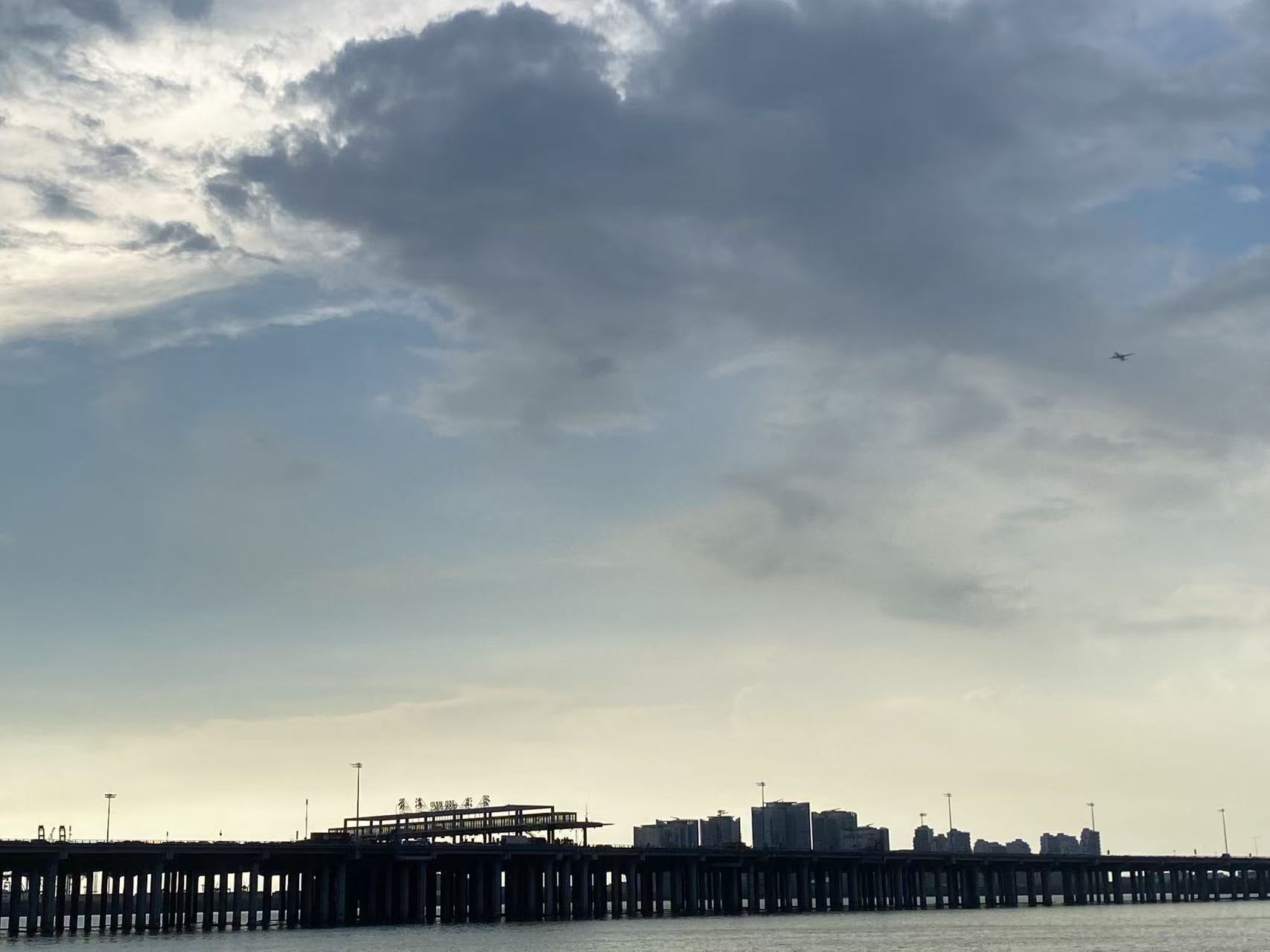
I returned to the main Qianhai Stone Park area in 2026 and often use the large Qianhai Stone landmark as the orientation point. For that section, the official reference is Qianwan Station (前湾站), Exit D, followed by a walk to the waterfront.
From this waterfront area, you can look across the bay toward the Bay Glory Ferris wheel (湾区之光) in OH Bay. Pin the exact entrance in Amap before leaving. The broader Qianhai waterfront also includes a newer Guiwan section, but that is not the section described by this local observation.
Choose Window of the World only if it matches your interests
Window of the World is a paid theme park built around replica landmarks. I have visited the exterior area but have not entered the park, so I do not evaluate its rides, queues, shows, or internal experience from personal testing.
If you enjoy theme parks and replica landmarks, check the current official ticket channel and give the park a substantial part of the day. If that is not your interest, make it a short exterior or photo stop and continue toward the waterfront.
Use OCT Harbour for a walk or meal
OCT Harbour combines dining, shopping, entertainment, and access to the Shenzhen Bay waterfront. I visited in 2025. That visit supports its role as a route stop, but not current shop hours, events, or show schedules.
For dish choices, ordering, dietary communication, and restaurant payment, use the guide to choose what to eat in Shenzhen.
The nearby OCT National Wetland Park is a separate venue with its own access and reservation rules. Walking through OCT Harbour does not automatically include entry to the wetland park.
Finish around the Houhai waterfront
Shenzhen Talent Park is an official public park in Houhai and can work as an evening waterfront and skyline stop. I have not visited it, so this recommendation is based on official access information and geographic route planning rather than firsthand testing.
Do not plan around a guaranteed light show. If a scheduled show matters to you, check the latest Shenzhen urban-management or Nanshan District notice on the same day. Weather, special events, crowd controls, and seasonal programs can change the schedule.
Add an older or more local counterpoint
If you have another half day, consider Dongmen Old Street in Luohu or Nantou Ancient Town in Nanshan. Dongmen offers an older commercial atmosphere; Nantou works well as a historical and urban-renewal stop within western Shenzhen. Individual museums, exhibitions, and venues may keep separate hours or booking rules.
A Practical One-Day Shenzhen Itinerary
This west-to-east route is best for travelers who want modern urban spaces and waterfronts. It is an editorial recommendation, not a promise that every stop fits every travel pace.
City-and-waterfront version
- Start at the main Qianhai Stone Park area. Walk the waterfront and use the large stone landmark as your orientation point.
- Stop near Window of the World only if interested. Without paid entry, keep this brief.
- Continue to OCT Harbour. Use it for a walk, a meal, or a break before evening.
- Finish at Shenzhen Talent Park. Go for the waterfront and Houhai skyline. Treat any light show as a bonus that requires same-day confirmation.
Check each next leg in Amap before leaving. Metro station walks and transfers can make a taxi or app-based ride more practical between some stops.
Theme-park version
If you buy admission to Window of the World:
- Keep Qianhai short and start early.
- Give Window of the World a substantial part of the day.
- Choose either OCT Harbour for dinner or Shenzhen Talent Park for an evening walk.
Trying to experience the paid theme park and all three other stops thoroughly would make the day unnecessarily rushed.
A Less Rushed Two-Day Plan
Day 1: Futian and Huaqiangbei
- Start with Lianhua Hill and the Civic Center area.
- Continue to the Futian CBD or a nearby cultural stop.
- Visit Huaqiangbei with a specific shopping or technology interest.
- Finish with dinner in Futian rather than crossing the city again.
Day 2: Western Shenzhen and the waterfront
- Begin at Qianhai Stone Park or Nantou Ancient Town.
- Choose a full Window of the World visit or skip the paid park.
- Continue through OCT Harbour.
- End around Houhai or Shekou, depending on your hotel and evening plans.
If you must return to Hong Kong that night, work backward from the last practical train or checkpoint connection and add a generous immigration and station buffer.
Common First-Visit Mistakes
Treating Shenzhen as one compact center
Plan one district cluster at a time. Futian, Luohu, Nanshan, the airport corridor, and the eastern coast are not one walkable sightseeing zone.
Confusing stations and crossings
Futian Metro Station, Futian Railway Station, and Futian Checkpoint are connected to different travel tasks. Shenzhen Railway Station and Shenzhen North are also different stations. Use the name printed on your ticket and save the Chinese destination.
Depending on one payment or data method
The international-card metro trial is helpful, but it is not a reason to travel without a backup. Keep another payment option, an offline hotel address, and enough information to reach a staffed service desk.
Assuming every attraction uses the same booking rule
Many public museums and city attractions now allow walk-in visits, but special-capacity sites, ticketed attractions, temporary exhibitions, and individual venues can have their own rules. Check the current official notice before going.
Promising yourself a light show
Light and drone shows are often announced for particular dates and can change because of weather or crowd controls. Build the evening around a good waterfront or skyline location, not around an unverified performance time.
Shenzhen First-Visit Checklist
- Choose one or two district clusters.
- Save your hotel and first destination in Chinese.
- Check the correct airport, railway station, or border crossing.
- Prepare mobile data, payments, and an offline fallback.
- Recheck ticketed-attraction rules on the official channel.
- Check the live route and station exit in Amap.
- Confirm the final Hong Kong connection if returning the same day.
- Carry your original passport when identity checks may apply.
More China City Guides
- Explore all China City Guides
- Beijing Guide for First-Time Visitors
- Shanghai Guide for First-Time Visitors
Official Sources and Review Notes
Key official references used for this guide:
- Shenzhen Government Online: city profile
- Shenzhen Government Online: official travel guide
- Shenzhen Transport Bureau: railway stations
- Shenzhen Airport: metro access
- Shenzhen Metro: fare policy
- Shenzhen Government: international-card metro trial
- Shenzhen Port Office: current checkpoint guide
- Qianhai Authority: parks and greenways
- Nanshan District: Window of the World
- Nanshan District: OCT Harbour
- Shenzhen Government: Talent Park access
- Foreign Affairs Office: Foreigner’s Guide to Shenzhen
Last verified: August 27, 2026. Metro trials, border hours, airport routes, attraction tickets, opening hours, reservations, and light-show schedules can change. Check the current official notice before departure.